SBOM Data Management as a Living System: Turning Software Transparency into Operational Intelligence
| Interlynk
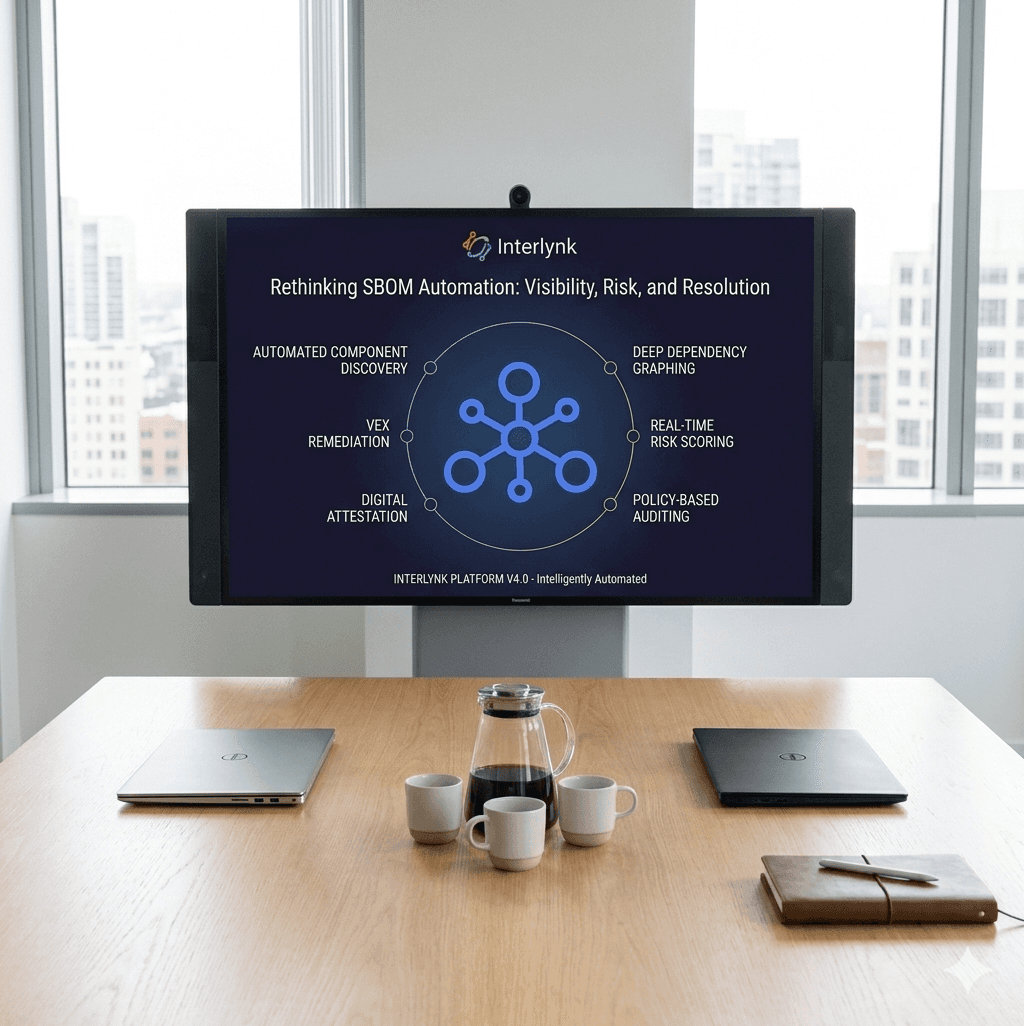
Software supply chains are no longer static artifacts. They are dynamic ecosystems where dependencies shift, vulnerabilities emerge, and compliance expectations evolve continuously. In this landscape, managing a Software Bill of Materials is not simply about generating a list of components. It is about building a living system that transforms SBOM data into actionable intelligence.
At Interlynk, we approach SBOM data management as an operational discipline rather than a compliance checkbox. This shift in perspective is where real value is unlocked.
The Problem with Static SBOM Thinking
Most organizations still treat SBOMs as snapshots. They generate them during a build process and store them as documents for audit purposes. This approach introduces several limitations:
• SBOMs quickly become outdated as dependencies change
• Security teams lack real time visibility into risk exposure
• Engineering teams struggle to align SBOM data with release cycles
• Compliance efforts become reactive instead of proactive
A static SBOM is similar to a photograph of a moving system. It captures a moment, but not the behavior.
From Artifact to Data Stream
The real opportunity lies in treating SBOMs as a continuous data stream rather than a one time output. This means integrating SBOM generation, enrichment, and analysis into the entire software lifecycle.
A modern SBOM data management system should:
Continuously update component inventories
Track version drift across environments
Correlate vulnerabilities with active deployments
Provide contextual insights instead of raw lists
When SBOM data flows through pipelines instead of sitting in storage, it becomes operationally useful.
Context is the Missing Layer
Raw SBOM data is not enough. Without context, it is difficult to prioritize risks or make decisions. For example, knowing that a vulnerable library exists is less useful than knowing:
Whether it is actively used in production
Which services depend on it
What business function it supports
How critical that function is
SBOM data management must include contextual enrichment. This transforms component lists into decision ready intelligence.
At Interlynk, we emphasize connecting SBOM data with runtime and business context so teams can focus on what actually matters.
SBOM as a Cross Functional Bridge
One of the most overlooked benefits of SBOM data management is its ability to unify teams.
Security teams gain visibility into real exposure
Developers understand the impact of their dependencies
Compliance teams access verifiable audit trails
Operations teams monitor software composition across environments
Instead of operating in silos, teams collaborate through a shared data foundation.
This alignment reduces friction and accelerates response times when issues arise.
Automation is Non Negotiable
Manual SBOM management does not scale. The volume and velocity of modern software development require automation at every stage.
Key automation capabilities include:
Automated SBOM generation during builds
Continuous monitoring for new vulnerabilities
Real time alerts tied to deployment environments
Automated policy enforcement for compliance requirements
Without automation, SBOM data quickly becomes stale and unreliable.
Policy Driven Governance
SBOM data management should be governed by clear policies rather than ad hoc decisions. These policies define:
Acceptable risk thresholds
Approved and restricted components
Update and patching timelines
Compliance requirements across regions and industries
By embedding policies into SBOM workflows, organizations can enforce standards consistently without slowing down development.
Interlynk enables policy driven governance that integrates directly into development pipelines, ensuring that compliance and security are built in rather than bolted on.
Measuring What Matters
To truly benefit from SBOM data management, organizations must move beyond visibility and start measuring outcomes.
Important metrics include:
MTTD: Mean time to detect vulnerable components
MTTR: Mean time to remediate dependency risks
VCP: Percentage of components with known vulnerabilities
ESC: SBOM coverage across applications and environments
These metrics provide a feedback loop that helps teams continuously improve their software supply chain posture.
The Strategic Advantage
Organizations that treat SBOM data as a strategic asset gain several advantages:
Faster response to emerging threats
Improved compliance readiness
Greater transparency with customers and partners
Reduced operational risk across the software lifecycle
SBOM data management becomes a competitive differentiator rather than a regulatory burden.
Closing Perspective
The future of software security and compliance depends on how effectively organizations manage their SBOM data. Static documents will not meet the demands of dynamic systems.
The shift is clear. SBOMs must evolve into living systems that deliver continuous insight, contextual intelligence, and automated governance.
At Interlynk, we believe that the organizations that embrace this approach will not only secure their software supply chains but also operate with greater clarity, speed, and confidence in an increasingly complex digital environment.
About Us
Interlynk builds software supply chain security infrastructure for teams that take SBOM seriously as an operational discipline, not a regulatory checkbox. If you're working through what complete SBOM coverage looks like for your regulated products, see how SBOMs map across CRA, NIS2, FDA and DORA; book a demo or explore our open-source toolset.